
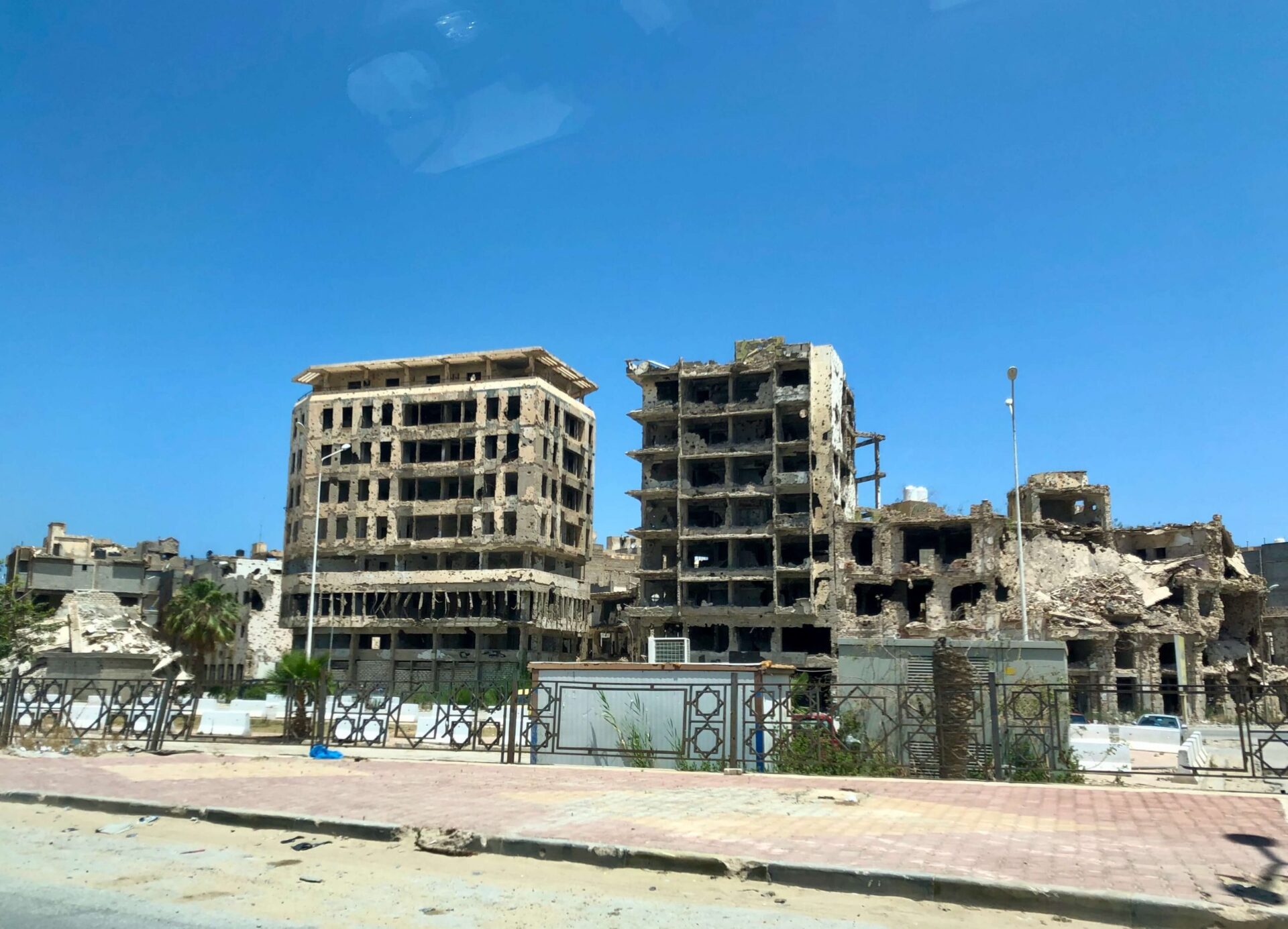
Despite increasing global attention on internal displacement over the past three decades, the number of internally displaced persons (IDPs) worldwide has steadily increased, reaching an all-time high of nearly 60 million IDPs in 2021. Against this backdrop, both the report of the High-Level Panel on Internal Displacement and the Secretary General’s Action Agenda on Internal Displacement call for strengthened efforts to identify and pursue durable solutions for IDPs, while highlighting the importance of strong data and evidence. This starts by collecting more accurate national statistics on IDPs.
Drawing on the example of Libya, where the Libyan government and the United Nations have undertaken a set of initiatives to support durable solutions for IDPs, this contribution discusses some of the key challenges in the development of accurate and, to the extent possible, comparable statistics on IDPs. These include the lack of a shared understanding among key partners at the country level on some of the key concepts and notions, including the definitions of IDPs and durable solutions. It also includes the lack of agreement as to “when displacement ends”; that is, when persons identified as IDPs should no longer be considered as such and thus be removed from the estimated number of IDPs in a country. While the adoption of a national Durable Solutions Strategy by the Libyan authorities has provided all relevant actors in the country with a common framework, including an agreement on the definitions, there is still a long way to go to put in place a system to measure the attainment of durable solutions in line with international standards.
Dr. Sébastien Moretti works as Senior Internal Displacement & Durable Solutions Adviser with the UN Resident Coordinator’s Office (RCO) in Libya. Sébastien has extensive experience working on migration and displacement issues with international and non-governmental organizations, in particular in the Asia-Pacific, in West Africa and in the Middle East.
This paper was written by the author for the 2022 Summer School on Internal Displacement in the Middle East – “Crisis, Displacement and Protection” – run by the Middle East Research Network on Internal Displacement, the Lebanese American University Institute for Migration Studies and the Internal Displacement Research Programme at the Refugee Law Initiative.
